Our Projects
Initiatives and projects implemented by PAPRI.
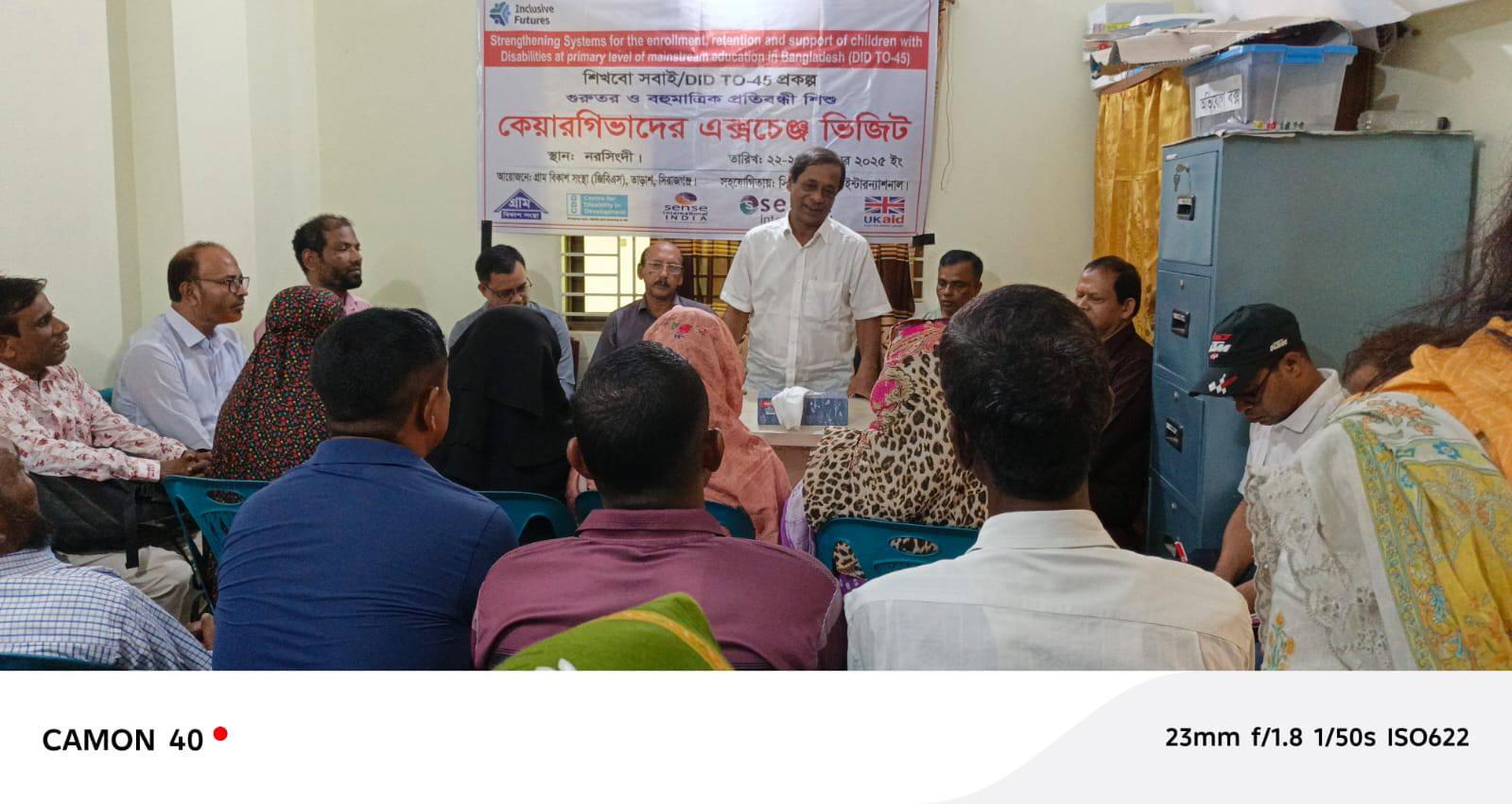
Strengthening systems for the enrolment, retention and support of children with disabilities at primary level of mainstream education in Bangladesh” SHIKHBO SHOBAI/DID TO-45 Project.
31 Jan 2026
SHIKHBO SHOBAI/DID TO-45 Project supports severely and multiply disabled children aged 5–10 in Narsingdi Sadar through functional assessment, individualized education, home-based ADL training, therapy, healthcare, assistive devices, and school inclusion. The project also strengthens parents and community support systems to improve children’s independence, development, and well-being. Background of the Project: PAPRI (Poverty Alleviation through Participatory Rural Initiatives) has been working since 1999 to integrate disability into development activities. PAPRI is involved in various developmental activities in all upazilas of Narsingdi district. PAPRI has gained a wide reputation in the entire district for improving the quality of life of disabled people through community based activities. In continuation of this, through regular home-based services and support for the multi-dimensional and severely disabled children aged 05 to 10 years of Sadar Upazila of PAPRI Narsingdi district, the environment and service capacity will be maintained in a suitable environment for school admission. A permanent infrastructure for children with multiple and severe Disabilities has been developed through the work of various local organizations. Train caregivers, immediate neighbors and community members to provide regular services to meet the needs of children with multiple and severe disabilities. By creating and promoting other appropriate communication challenges (eg meetings and testimonials), children with multiple and severe disabilities and caregivers, nearest neighbors should be given the information they need about child protection and play a role in decision-making about their various abuses. Project Name: Strengthening systems for the enrolment, retention and support of children with disabilities at primary level of mainstream education in Bangladesh” SHIKHBO SHOBAI/DID TO-45 Project. Project Concept: Under the DID TO-45 Project, severely and multiply disabled children aged 5 to 10 years in Narsingdi Sadar Upazila have been identified through a survey conducted by Penda. Following identification, each child undergoes a Functional Assessment to determine what type of services they require. Based on this assessment, regular services are being provided. After the Functional Assessment, an Individual Education Plan (IEP) is developed for each child. In the initial stage, home-based services are provided focusing on the child’s Activities of Daily Living (ADL). The ADL activities generally include brushing teeth, eating independently, bathing alone, wearing clothes, buttoning shirts, using the toilet, holding pens or pencils, introducing colors, recognizing letters and numbers, and learning small words and sentences. Using appropriate Teaching-Learning Materials (TLMs), children with disabilities are gradually taught various concepts and skills. For children who experience continuous drooling, special exercises and therapies are used to reduce or stop salivation. Children who cannot hold their head upright, sit, stand, or walk are improving physically through therapeutic support. Children requiring medical treatment receive free clinical services from specialized doctors through Health Camps (Clinical Assessment) organized by the project. Coordination with government hospitals ensures access to free medicines, and linkages are established with different hospitals to facilitate necessary medical care. Children in need of assistive devices such as standing tables, standing boards, standing frames, walkers, toilet chairs, special chairs, corner chairs, AFO (Ankle Foot Orthosis), KAFO (Knee Ankle Foot Orthosis), Wrist Hand Orthosis, or spectacles are being provided these items through the project. The project also coordinates with Union Parishads to facilitate birth registration and helps families access government benefits such as VGF (Vulnerable Group Feeding) and VGD (Vulnerable Group Development). Coordination with the Department of Social Services ensures that children with disabilities receive disability ID cards and are enrolled under the disability allowance program. Through collaboration with the Disability Service and Assistance Centers, children also receive assistive materials and essential services. Members of Organizations of Persons with Disabilities (OPDs) are working alongside project staff as part of Community Support Teams (CSTs) at the field level. The parents of children with disabilities are trained to enhance their caregiving and management skills. The project also works with primary schools to facilitate the enrollment of children with disabilities and conducts regular follow-ups to monitor their progress. Project Duration: 16 August 2022 to 31 December 2025 Project Area: Sadar Upazila of Narsingdi District. Number of Unions:7 (Chinishpur, Hajipur, Nazarpur, Karimpur, Shilamandi, Kathalia and Amdia) Municipalities: 2 (Narsingdi and Madhavadi) Number of schools: 15 Beneficiaries: Children with Severe and Multiple Disabilities. Age of Beneficiary : 05 to 10 years. Total number of beneficiaries: 97 Children .(Male-51 & Female-46) Donor: Sense International UK & Sense International India Project Objectives: 1. Although working in schools is the primary focus of this task order, for the first six months of TO-45, members of the consortium partners will work at the community level and with OPD members to raise awareness about school enrollment of children with disabilities, as well as children with disabilities who have been enrolled in schools in the past or not, will ensure their access to home-based education systems that meet their specific learning needs. 2. Prepare children with disabilities for inclusion or re-integration into school through home-based education programs and continue the activities of school-based programs. Home-based education will continue primarily for a small number of children with disabilities who are severe and complex and for whom school-based education may not be appropriate, while most children with disabilities will be supported through school-based programs. Major Achievement: • Children/family members were brought under the asset accumulation initiative. • Regular meetings were held with caregiver groups. • Functional assessment and participation in health camps were ensured for 12 new children. • Health check-ups were conducted for 63 children through clinical assessment/health camps. • Free medicines were provided from the district hospital for children who participated in the clinical assessment. • Winter clothes were distributed among children with disabilities and their family members. • Assistive devices were distributed among children with disabilities through the District Administration. • First prize was received at the Youth Festival in collaboration with NGOs. • Support was provided to children with severe and multiple disabilities to obtain birth registration cards and disability ID cards. • An exchange visit was organized in Sirajganj with caregivers. • Through asset accumulation, arrangements were made for 4 children with disabilities to receive BDT 12,000 annually for 5 years from a private organization. • Support was provided to access VGF goods from Union Parishad and Municipality.
View Project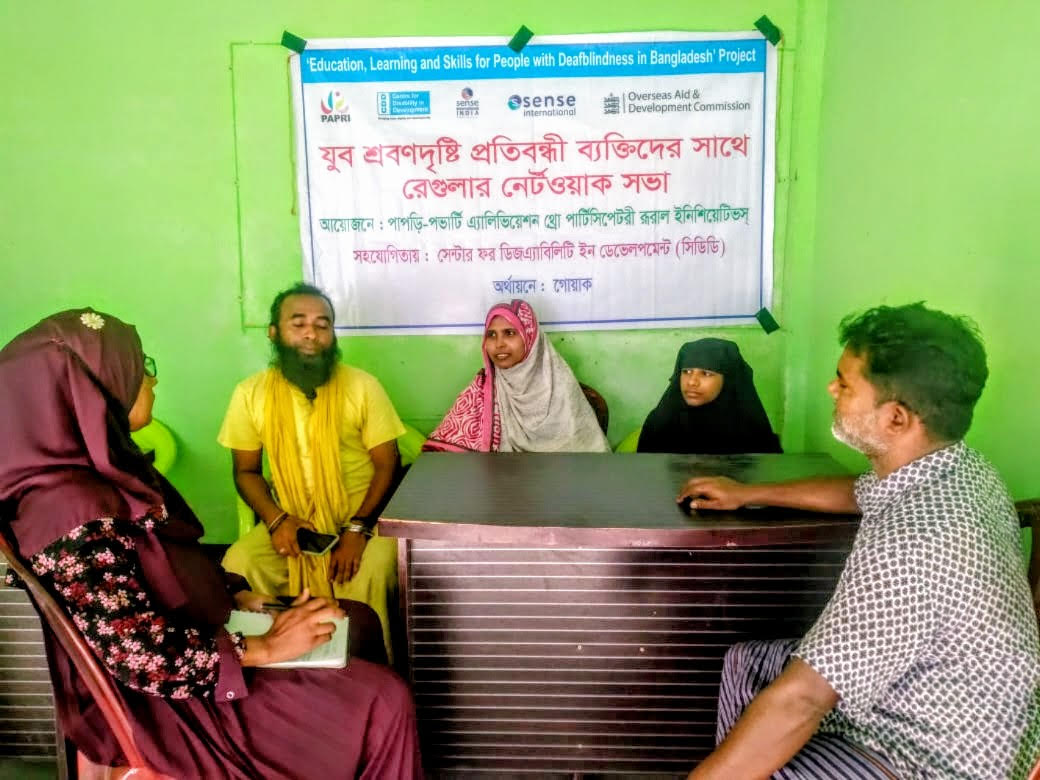
Education, learning and skills for people with deaf blindness in Bangladesh
01 Jul 2025
Deafblindness refers to a combined hearing and visual impairment that significantly affects communication, learning, mobility, and independent living. PAPRI’s project supports deafblind children and adults through assessment, individualized education, home-based ADL training, therapy, assistive devices, healthcare, education, livelihood support, and family capacity building, promoting greater independence and inclusion. Background of the Project: Ever since the beginning, PAPRI has been playing a significant role on the disabled issue and closely eyeing in its working area for the betterment of the people from all sorts of disabilities and trying best for being brought out and aggregated them under a safe umbrella through introducing different activities and support program from different corners. To erase the situation and create a comfort zone for the persons with disabilities, PAPRI teamed up itself with likeminded other development partners at home and abroad aimed to gear up the mobility and enhance the socio-economic condition of the people having severities in the area of deafblindness in the rural area, especially in Narsingdi district. To address the mentioned project PAPRI has made an agreement with the Centre for Disability in Development (CDD) in 2018, as an implementing organization with financial support from Guernsey Overseas Aid Commission (GOAC) Name of the project: Education, learning and skills for people with deafblindness in Bangladesh Project Concept: Through the Deafblind Project, services are being provided to children with hearing and visual impairments aged 0 to 30 years in five upazilas of Narsingdi district. The project is implemented by PAPRI in partnership with CDD, with financial support from Sense International UK and GOAC, and technical assistance from Sense International India. Initially, identified deafblind individuals undergo Functional Assessment and Clinical Assessment to determine their levels of hearing and vision. Based on the results, appropriate communication methods and services are provided. An Individual Education Plan (IEP) is developed for each child. Through home-based services, children receive training on Activities of Daily Living (ADL), such as brushing teeth, eating independently, bathing, dressing, buttoning clothes, using the toilet, holding a pen or pencil, recognizing colors, letters, and numbers, and learning simple words and sentences. Using appropriate Teaching and Learning Materials (TLM), these children gradually acquire various skills. The project established a RRC center at PAPRI head office premises, where therapy and hearing-vision stimulation services are provided, which help improve their physical abilities as well as their hearing and visual functions. For children who have excessive drooling, therapy helps to reduce or stop it. Those who cannot hold their heads upright, sit, stand, or walk are receiving physical improvement through therapy. Children requiring medical care are referred to neuro-medicine specialists, provided with medicines under the project, and connected to government hospitals for access to free medication. The project also supplies assistive devices such as standing tables, standing boards, standing frames, walkers, toilet chairs, special chairs, corner chairs, hearing aid,law vision glass Wrist Hand Orthosis, and spectacles. Malnourished children are given nutritional support. Those who are of working age receive Income Generating Activities (IGA) training to enhance their skills and are provided with cash support to start small income-generating activities—without any repayment requirement. The project also works with Disability Service and Support Centers to obtain assistive devices and other essential services. Awareness meetings at district and upazila levels help ensure the rights of persons with disabilities. To ensure school enrollment and education for deafblind children, meetings are held with students, teachers, and School Management Committee (SMC) members. Adaptations to the government curriculum are made, and training is provided to government and non-government teachers. Curriculum workshops are organized with education officers, teachers, parents, and disabled students, which has made learning easier for deafblind learners. Parents of children with disabilities receive training to build their capacity so that they can better support the daily living of their children at home. Project Purpose: 1. Inclusion deaf-blind people in society developing disable friendly infrastructures 2. Provide social support for deafblind children and their families. 3. Ensure the inclusion of disabled children in mainstream schools. 4. Organize training sessions on inclusive education for government officials. 5. Activate the regional network group .
View Project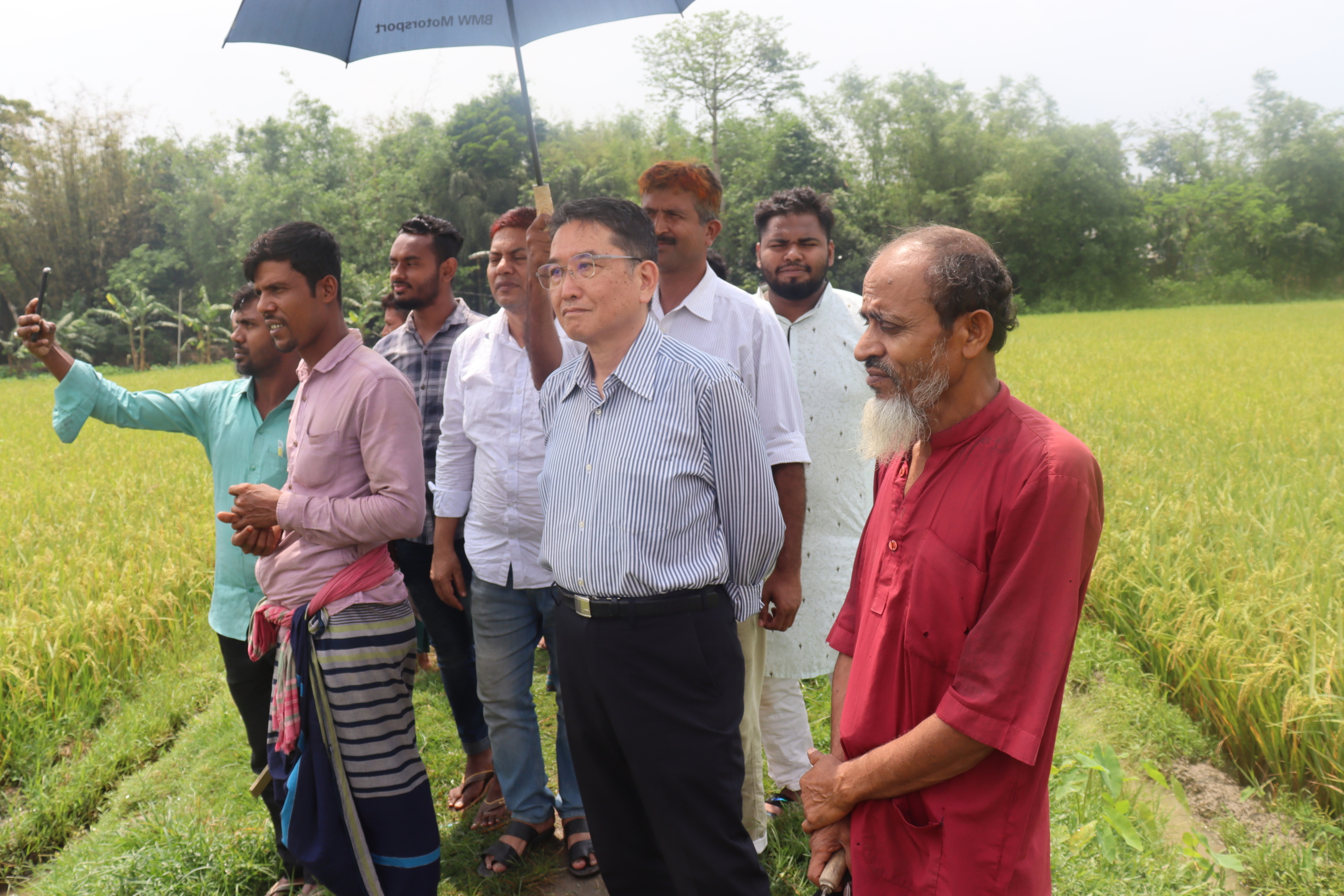
Creattura AWD/ JCM Project in Narsingdi
31 May 2025
Alternate Wetting and Drying (AWD) is a rice irrigation method that alternates field flooding and drying, irrigating only when necessary. The Creattura AWD/JCM Project in Narsingdi promotes AWD among Boro farmers through training, demonstration, monitoring, and incentives, aiming to reduce water use and methane emissions while increasing rice yields and lowering irrigation costs. Background of the Project: Rice is very important for Bangladesh. It is the main food people eat and a key part of the country’s farming economy. Among all types of rice, Boro rice is the most widely grown each year. However, traditional rice farming in places like Narsingdi uses a method called continuous flooding. This method uses a lot of water and is not good for the environment or for farmers’ finances. This traditional method has serious problems. It is draining groundwater fast, which may cause water shortages in the future. Flooded fields also produce methane gas, a greenhouse gas that harms the climate. At the same time, farmers spend more money on water, energy, and labor, which increases their costs. To address these problems, the Creattura AWD/JCM Project in Narsingdi was launched. The goal is to make rice farming climate-friendly, water-efficient, and profitable. The project uses a method called Alternate Wetting and Drying (AWD). In this method, fields are allowed to dry for some time before watering again. This simple change helps farmers increase yields by 15–20%, save 30–40% of water, and reduce methane emissions. The project is run by PAPRI (Poverty Alleviation through Participatory Rural Initiatives) with support from Share the Planet Association and Creattura, Japan, providing both funding and technical guidance. Project Concept: The Creattura AWD/JCM Project in Narsingdi is a focused six-month initiative implemented by the organisationPAPRI (Poverty Alleviation Through Participatory Rural Initiatives) to address critical agricultural and environmental challenges in central Bangladesh. With financial and technical support from Share the Planet Association of Japan, the project is being implemented in Naraynpur and Radhanagar unions under Belabo and Raipura upazilas of Narsingdi District Narsingdi is a predominantly agricultural region where rice occupies nearly 80–90% of the cultivated land. Farmers in this area, particularly during the Boro season, depend almost entirely on groundwater through continuous flood irrigation, keeping rice fields submerged throughout the cropping period. Although this method ensures good yields, it has created a severe water and environmental crisis. Under the project initiatives, staff and farmers received specialized training on AWD principles, field implementation, and data recording. This was followed by a comprehensive farmer survey to identify participants and document baseline conditions of their rice fields. Each plot was then numbered and mapped for easy monitoring and record-keeping. Once farmers were ready for field activities, the project supported them in seedbed preparation and ensured that transplanting was carried out in a timely manner to maintain consistency across demonstration plots. After transplanting, observation wells (Magic Pipes) were installed in each field to initiate AWD irrigation. The AWD process began with regular water-level measurement and monitoring, allowing farmers to irrigate only when necessary. Project staff conducted periodic meetings with farmers to review progress, discuss challenges, and provide technical guidance. To encourage continued participation and ensure motivation, the project also provided incentive support to farmers adopting AWD practices. By the end of the project, irrigation water use is expected to decline by 30–40%, methane emissions to reduce by a similar margin, and rice yields to increase by 15–20%. Reduced irrigation costs will make AWD economically attractive, allowing farmers to reinvest their savings into further agricultural development. The project aligns closely with national agricultural priorities and global Sustainable Development Goals (SDGs 1, 2, 12, and 13). Through knowledge transfer, institutional collaboration, and practical demonstration, the project will empower local farmers to become champions of sustainable rice cultivation—laying the foundation for long-term environmental resilience and food security in Narsingdi. Name of the project: Creattura AWD/JCM Project in Narsingdi Goal: Increase rice production by 15-20% through the AWD method by enhancing awareness and skills while reducing methane gas emissions. Purpose: Enhance farmers' awareness and skills to improve rice productivity through the application of the AWD method, while reducing methane gas emissions associated with climate change. Total Direct beneficiaries: 254 farmer Working Area: 5 villages of Belabo & Raipura Upazila under Narsingdi district Project Donor: Share the Plannet Association, Japan & Creattura, Japan Duration: The project has a duration of six months, commencing on 1 December 2024 and concluding on 31 May 2025. Basic Information of the Project Areas: Total Farmers: 254 Total plots: 544 Land Areas: 51 hectares Key activities are performed during the project: Several key milestones were reached over the project's six-month duration as follows: • Staff recruitment was completed. • Farmer surveys were completed. • All 544 plots were identified and numbered. • Staff training was successfully conducted. • The project was officially inaugurated on 19 December 2024. • Farmer training was completed between 28 December 2024 and 2 January 2025. • A District Level Project Orientation was successfully held on 19 January 2025, with 110 participants • A Union Level Project Orientation was successfully held on 20 January 2025, with 40 participants including the UNO of Raipura as chief guest. • Installation of 12 GHG measurement chambers (6 at AWD plots and 6 at non-AWD plots) was completed on 15 January 2025 with the support of a specialized team from BRRI. • Spot training on chamber setup, data collection, and safety was provided to field staff. • Online meetings were held with Share the Planet Association and Creattura multiple times. Field visits were conducted by representatives from Share the Planet Association, BRRI, and PAPRI leadership to observe project activities and engage with farmers. • Incentives were successfully distributed to all 254 participating farmers on 27 April 2025. • Harvesting commenced in late April 2025 and continued up to May 2025. • Work began on a documentary film about the project's success, organized by Share the Planet Association and IFAD. Accomplished activities during reporting period as follow Sl no Activities Target Achievement Remarks 01 Total land area 50 Hectors 51 Hectors 02 Orientation on Survey 01 day 01 day 03 Farmer’s Survey conduction 254 farmers 254 farmers 04 Staff Training 01 time 01 time 05 Plot numbering 549 plots 549 plots 06 Training on Apps 01 day 01 day 07 Farmers Training (06 Days) 254 farmers 248 farmers 08 Organize union level Project Orientation 01 01 09 Organize district level Project Orientation 01 01 10 Support the Installation of Gas Chambers 12 chambers 12 chambers 11 Observation Pipe numbering and distribution 549 549 12 Plot-wise water-level measurement 6892 7035 13 Upload picture of plot at (-)15 cm 1088 1342 14 Pictures Input in Apps 1632 2192 15 Field level meeting with data collector - 04 16 Online meeting with SPA and the Creattura 10 9 17 Meeting with Farmers Need base 06 18 Meeting with Data collectors Need base 05 19 Project Area visit by different dignitaries Individuals Need base 24 Major Outcomes: • Farmers are happy to see the rice yield. Almost all farmers have been covered under the AWD system. • Farmers have become aware of the various varieties of rice for boro cultivation. The local agriculture department has focused on the implementation of the AWD system within the project area. • Union Parishad, Upazila Administration, Local Elite - In particular, people of different classes, including imams, teachers, fertilizers, fertilizers, have become aware of the AWD system in paddy cultivation mainly boro cultivation. Challenges: • Bringing all farmers within the project's scope. • Starting project work at the earliest preparation time. • Conducting extensive training in a very short time to ensure data and agriculture extension. • Motivating all farmers to prepare seedbeds in due time. • Planting seedlings together at a specific age. • Completing farmer training within the shortest possible time. Learnings: • It is possible to motivate farmers through the presentation of accurate agricultural information and practical collaboration at the field level, using training and motivation on productive subjects. • Even though the use of AWD and Go-Tech technologies may be new for data collectors and field mobilizers in the project, ensuring their effective use will help establish a dynamic coordination with technology in the project's implementation in the coming days.
View Project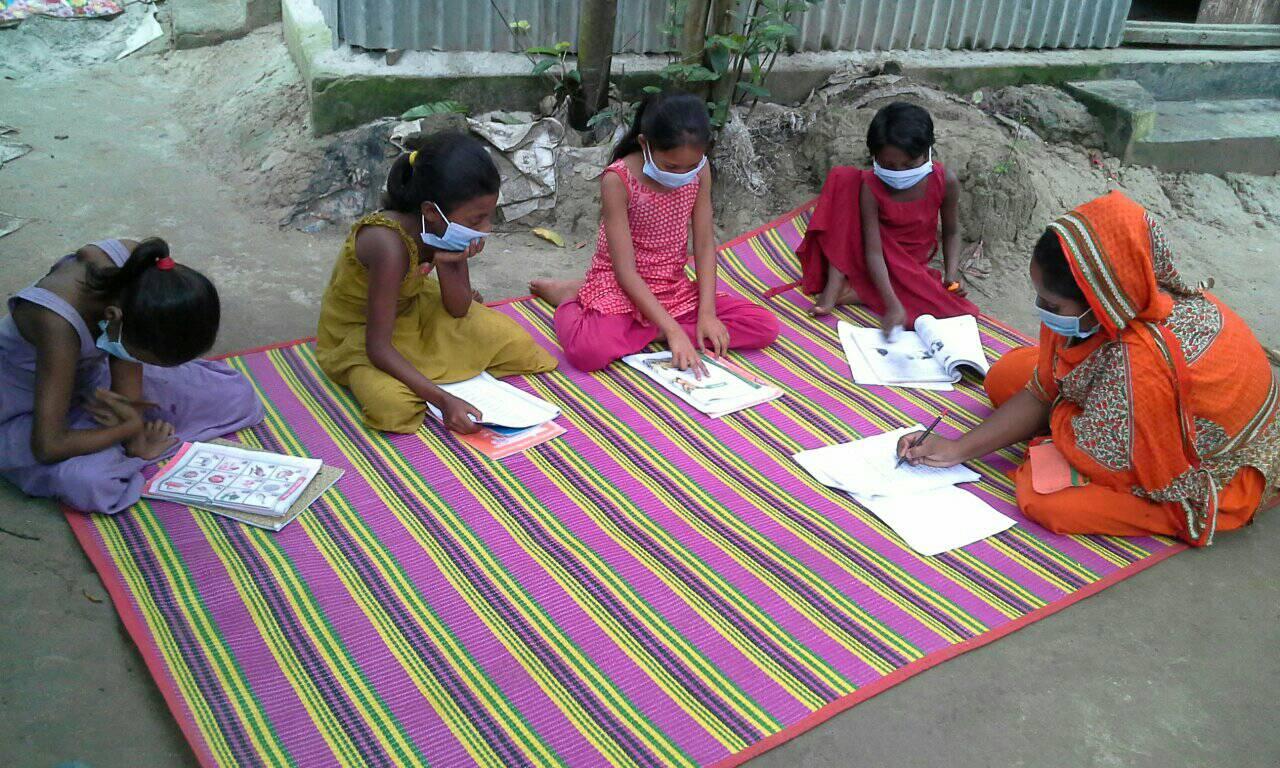
Organizing Diversified & Holistic Initiatives on Knowledge Acquisition for Remotest char area children (ODHIKAR) Project
21 Mar 2024
Background of the Project: From its inception, PAPRI (Poverty Alleviation through Participatory Rural Initiatives) has been deeply committed to education at all levels. Our journey has encompassed a diverse range of educational initiatives, including basic literacy, adult education, child education, and the Madhamik school. We have also been actively engaged in addressing the unique educational challenges faced by children in the char areas, specifically in the Bashgari, Mirjarchar, and Paratoly unions. In our relentless pursuit of improved educational outcomes, PAPRI took a significant step forward with the release of the booklet titled "Wings of Change on Char Education." This publication was a pivotal component of the Char Education Program through Community Mobilization (CEPCM), which was successfully phased out in 2018. CEPCM illuminated the path to enhancing children's education in the char areas through close collaboration with School Management Committees (SMCs), local communities, government institutions, and other stakeholders. One of the char unions under our purview, Chandpur in Raipura Upazila, Narsingdi district, presents a unique set of challenges. This union is geographically isolated, surrounded by the mighty River Meghna, making it susceptible to natural calamities. Transportation and communication are predominantly reliant on boats, with only a single road connecting twelve villages while three others remain isolated from the rest of the region. As a result, government and non-government employees, including primary school teachers, Assistant Upazila Education Officers (AUEOs), union-based health officers, media personnel, and NGO staff, often find it challenging to access this remote area. The absence of instructors in Government Primary Schools (GPS) exacerbates the educational challenges faced by the children in this area. Our observations have revealed that GPSs in the area have not consistently catered to children from low-income families, taken steps to retain them in school, or maintained accurate records of repeaters and dropouts. Students enrolled in these schools have often been caught in a cycle of repeating classes, transitioning to Madrasahs, and ultimately dropping out. While government policy mandates such as home visits and cocurricular activities by teachers to support weak, irregular, and dropout students have not been consistently followed due to different limitations, Irregular attendance due to a lack of teachers has placed many children at risk of academic failure. In response to these pressing challenges and with a firm commitment to extended learning opportunities, PAPRI has initiated the ODHIKAR project in Chandpur union, a char union. This project introduces a fresh dimension with a focus on mainstreaming impoverished children. We aim to reduce the educational disparities faced by these children within the GPSs. Moreover, PAPRI seeks to elevate the issue of education for char children within the community and among relevant stakeholders, fostering greater awareness and engagement. The ODHIKAR project represents our continued dedication to transforming the light of children through education. With the support of the local community and our partners, we strive to empower every child, regardless of their socio-economic background, to access quality education and achieve their fullest potential. Name of the project: Organizing Diversified & Holistic Initiatives on Knowledge Acquisition for Remotest char area children (ODHIKAR) Project Project Purpose: Holistic learning opportunities for marginalized children (Remotest Char Area Children) have been strengthened through mobilization of different stakeholders Total beneficiaries: 5148 children Working Area: Chandpur Union of Raipura Upazila under Narsingdi district Project Donor: SHAPLA NEER = Citizens' Committee in Japan for Overseas Support Project Duration: March 2021-March 2024 Major Outcomes: In the fiscal year 2022-23, the ODHIKAR Project achieved significant outcomes in its mission to transform the educational landscape of Chandpur union in Narsingdi district. This initiative has been instrumental in addressing the unique challenges faced by children in char areas. Here are the major outcomes: • The project successfully increased school attendance among children from low-income families. Targeted interventions, including awareness campaigns and support programs, contributed to a reduction in absenteeism. • Efforts to retain students in school were fruitful, with fewer children dropping out or repeating classes. Enhanced support mechanisms and engagement by the Para Teacher (PT) and Education Facilitator (EF) with parents played a crucial role in this outcome. • The project raised community awareness through film show, community based meeting about the importance of education and the unique challenges faced by char children. Local communities became active stakeholders in promoting education. • Project initiatives encouraged teacher engagement and home visits to support weak, irregular, and dropout students. Teachers played a more active role in ensuring consistent attendance. • The project demonstrated education and cultural fair, speeches from iconic figures, and meetings with SMC, UP, the Upazila Education Office, and the Upazila Administration that open a conducive atmosphere in primary education for the remotest children. Challenges: • Continuation of the present education wave in Chandpur Union by the involvement of community members, volunteers, including the Upazila Education Department and Upazila Administration beyond the project cycle. • Ensuring adequate resources for sustained educational support in remote areas remains a challenge. • Socio-economic barriers continue to affect children's access to education, necessitating ongoing efforts to bridge these disparities. Learnings: • Engaging local communities as partners is essential for the success of educational initiatives in remote and challenging environments. • Actively involving parents in their children's education can significantly impact attendance and retention rates.
View Project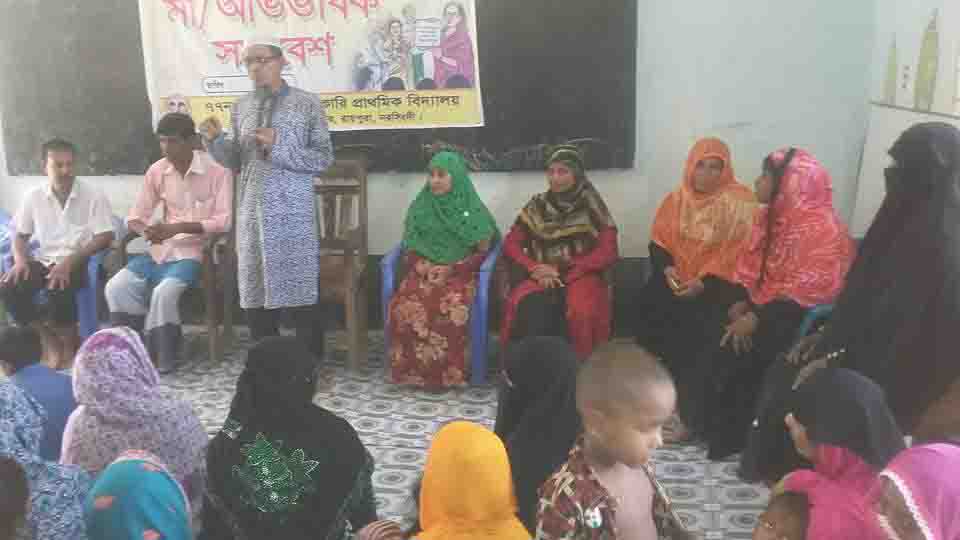
Children Education Program through Community Mobilization (CEPCM) at char area of Narsingdi district
24 Mar 2019
Raipura is a river basin char area of Narsingdi district where some of its main portion is isolated from main land called char area which is undeveloped compare to other part of Raipura which reflects mainly on education especially on primary education. The literacy rate of Raipura upazila is 40.05% and this is the lowest rate out of each six upazila in Narsingdi district (Source: Census report of 2011) as Raipura upazila is having 06 char unions. Paratoli union is one of char union under Raipura upazila and having several government primary schools, Kindergarten, Madrasha but children enrollment rate is very poor. Every government primary school, kindergarten and Madrasha has a School Management Committee but most cases SMC are not active, teachers are not performing as it should be; local govt. institution is making poor concentration on that matter. Parents are showing less attention about their children education and some parents reluctant to send their children in school due to unconsciousness and unaware.(Source : Midterm evaluation of ECEPF project) Though government interferences are there but lack of community awareness child enrollment still poor than other part of Raipura. Here one big problem is that a good number of children who usually missed out from child survey due to careless of SMC. Even due to unconsciousness of community people are helping to boost up drop out children from school before completed their education. Behind the situation, the biggest cause is that SMC’s are showing less attention regarding school and school teachers. Although, there are supposed to be access for all children to Government primary schools. Though some intervention including govt. primary schools are there in Paratoly but the present situation says that the condition of children education is in under crucial. PAPRI worked in Bashgari and Mirzarchar isolated char unions of Raipura upazila through different development interventions say adolescent functional education program, child education program and so on and in this connection PAPRI has been gathering experience on char areas since 2006 in order to ensure all children's in education under primary level through giving support to poor children such as; center base coaching facility, education materials distribution and providing stipend facility. At the same time PAPRI has come to know the present problem including latent needs of char people. Gathering experiences from previous activity PAPRI changes program designed as community mobilization instead of direct supports to stakeholders. Under all above circumstances, PAPRI has taken CEPCM project in Paratoly. Goal: All targeted children are under the primary education without repetition. Purpose: All targeted children are regularly learning at primary school, even repeating in a year. Beneficiaries/Target Group: All school aged children (12 Schools) Direct- dropout students 243 & Not admitted children-313, Total=556 children. Indirect- 4829 students of pre-primary to class-five in twelve schools. Outcomes: 1. This year all schools (12 GPS) organized SMC meeting by their own initiatives and have taken necessary decisions for school. Now, SMC members are taking some initiatives such as monitor teachers, check attendance of students and organize SMC meeting. 2. To meet up teacher shortage at schools, Para teachers are recruited by SMC to continue classes. 3. 2 SMC orientations held for new SMC members in this year. 4. 20 village meetings with 353 participants and 42 group discussion meetings with 375 participants were held in this year 5. 227 irregular students have become regular out of 270 irregular students. SMC, school teacher and project staffs are emphasized on reducing irregularities from each school 6. Enrollment rate has been increased than the previous year. (Enrollment rate was 76% in 2015, 87% was in 2016, 99% was in 2018 and this year 99% also). 7. During children admission in school, teachers are collecting birth certificates from the guardian. Birth certificate rate has been increased gradually. 2015-57%, 2016-62%. 2017-84% and 2018-95 8. AUEO participated in a mothers’ meeting and proposed to mothers to ensure Tiffin box for class five students (81 students). Then, 18 guardians provided 1400/- (One thousand four hundred) taka in cash to school for purchasing Tiffin box. 9. All school (12 GPS) organized annual sports in this Year and AUEO of Raipura upazila Ms. Rebeka Sultana took participation in two school sports program where local elite, UP also come up with contribution and cooperation. In this regard, some are as follows: • Chairman of Sonabalua GPS Mr. Saiod hossain contributed 5000 taka to school for annual sports. • Acting head teacher of Madhyanagar madhyapara GPS Mr. Keramot Ali contributed 1000 taka to buy annual sports prizes. • Elite persons of Kacharikandi uttarpara Makbul hossain, husband of SMC member Beauty begum provided prizes for teachers by taka 2000/- • Elite person of Paratoly GPS, Mr. Abul Hossain provided 3500 taka to school for purchasing prizes of annual sports. • UP Education standing committee member Ms. Maleka begum participated with 12 pieces plate in annual sports at Singrapur GPS. • SMC chairman provided 05 pieces umbrella for school teachers. • SMC member of Singrapur contributed with 500 taka for Singrapur annual sports • UP education standing committee member Mr. Mojibur Rahman gave 500 taka to Singrapur GPS for organizing annual sports at school. 10. UP administration including local elite persons have come up with positive attitude towards children education. Through SMC,UP and local elites contribution a lot of school activities are performed during the reporting year as follows: At Azizpur GPS SMC and local elite persons ensure school field hole filling by taka 1,50,000 Getting information from the SMC orientation about SLIP (School Level Improvement Project) fund, instantly Singrapur SMC organized SMC meeting and discussed about SLIP fund. Finally they used that amount in school development work. Such as: Tube well repairing, chair making etc. SMC chairman Mr. Saiod hossain provided a sub meter by taka 1250 to school. At Azizpur GPS, by the initiative of SMC about 25 feet wall is prepared beyond of the school by the land owner. Now school is safe from bad smell (Cow dung). Learning's • SMC’s activeness in School ensure certain development for GPS • UP engagement is very positive for ensuring good school activities Challenges: • Regular class in all school • Students at risk at dropping out • Active Role Playing of UP Education Standing Committee • Active participation by SMC in school activities • All student Appearance in Terminal Examination
View Project